
 русский
 Español

Industry News
Stainless Steel Metal Pushbutton Switch Demand Grows in Food, Medical, and Outdoor Applications
Date:Sep 18, 2026
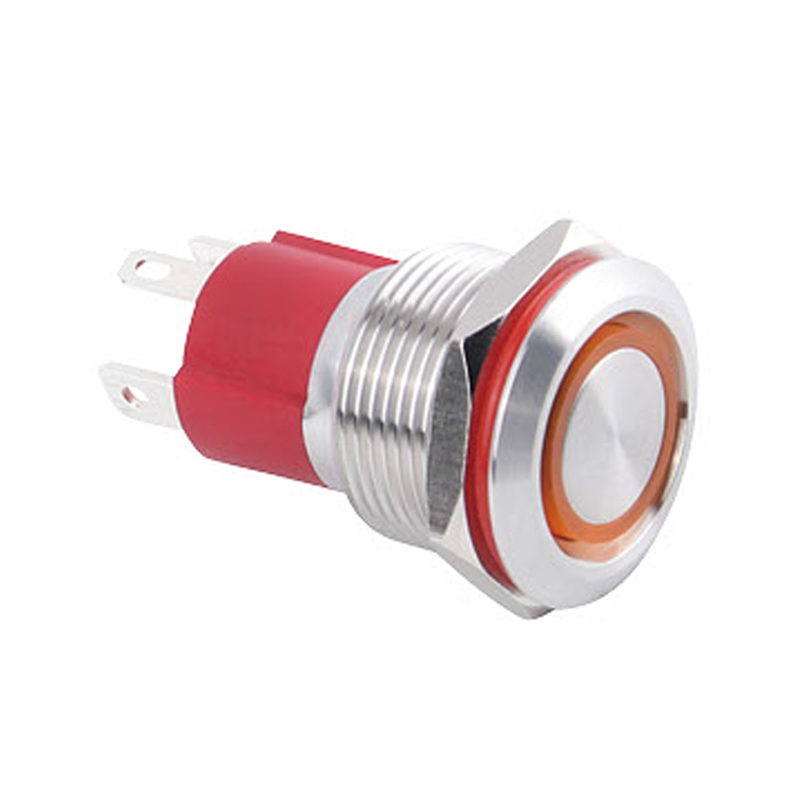
Stainless steel metal pushbutton switches are being used in more equipment where the switch has to handle water, cleaning, corrosion, or frequent operation. Food processing machinery, medical equipment, outdoor systems, and industrial control panels are among the applications where stainless steel designs are commonly specified.
Most products use 304 or 316 stainless steel for the housing. The choice usually depends on the environment. 304 is suitable for many general applications, while 316 is often considered when the equipment will face saltwater or other corrosive conditions.
Food and Medical Equipment Require Easy-to-Maintain Controls
Food processing equipment is cleaned frequently, and switches mounted on the machine can be exposed to water and cleaning agents during washdown. Stainless steel is already widely used on food-processing equipment because the material is durable and relatively easy to clean.
The switch still needs suitable sealing, however. A stainless steel housing does not by itself make a pushbutton suitable for every washdown environment. The IP rating and construction of the complete switch also need to match the installation.
Medical and laboratory equipment has similar requirements. Controls may be wiped or disinfected repeatedly, so manufacturers offer stainless steel pushbuttons for equipment such as patient monitors, diagnostic systems, and laboratory instruments. Compatibility with specific disinfectants depends on the materials used in the individual switch.
Outdoor and Marine Applications Put Corrosion Resistance to the Test
Outdoor equipment faces rain, humidity and temperature changes. Marine equipment can add saltwater to the list, making corrosion resistance particularly important.
This is one reason 316 stainless steel is commonly considered for marine and coastal applications. Its composition provides better resistance to chloride-related corrosion than 304 stainless steel. For less aggressive outdoor environments, 304 remains a common choice.
The protection rating is also important. Depending on the product, stainless steel pushbutton switches may be available with IP65, IP67 or IP68 protection.
Common specifications include:
- Contact rating: up to 10A
- Voltage rating: up to 250V AC/DC
- Housing material: 304 or 316 stainless steel
- Button styles: flat, dome, or raised
- Mounting: panel mount, including 22mm and 30mm options
- Protection ratings: IP65, IP67, IP68
- Termination: screw, solder, or quick-connect
Actual ratings vary by product, so the switch specification needs to be checked against the equipment requirements.
Industrial Control Panels Continue to Use Stainless Steel Switches
Stainless steel pushbutton switches have been used in industrial control panels for years. Their use has remained relevant on machinery where switches are exposed to vibration, dust, moisture, or changing temperatures.
For a factory machine, the housing is only part of the equation. Internal contacts, the actuator mechanism, mounting method and sealing all affect performance. Electrical load is another consideration. A switch must be rated for the voltage and current of the circuit it controls.
Replacement demand is also part of the market. Pushbuttons are mechanical components and can eventually wear out, particularly on equipment that is operated many times each day. A replacement switch can often be fitted to an existing panel without replacing the complete control system.
Button design varies as well. Flat, dome and raised actuators provide different tactile responses, allowing equipment builders to choose a style that suits the operator interface.
Higher IP Ratings Are Becoming More Important in Harsh Environments
Protection against water and dust has become a key specification for switches used outside cabinets or in areas subject to cleaning.
IP65 provides protection against dust and water jets. IP67 adds protection against temporary immersion, while IP68 is intended for immersion under conditions specified by the manufacturer. These ratings are not simply interchangeable, and the correct choice depends on the actual installation.
For a food-processing machine that is washed down regularly, for example, the switch may need a higher level of water protection than a control mounted inside a dry electrical cabinet. Outdoor and marine equipment can have similar requirements.
Stainless steel metal pushbutton switches continue to be available in a wide range of configurations. For buyers, the main considerations remain fairly straightforward: the electrical load, the environment, the required IP rating, the stainless steel grade, the panel dimensions and the type of button required.
With those factors matched to the application, stainless steel switches can provide a durable control solution for equipment operating in wet, corrosive, or heavily used environments.



Ready to experience the reliability and innovation of WANDU Electric switches?
© Zhejiang Wandu Electric Co., Ltd.
China Push-Button Switch
