
 русский
 Español

Industry News
High-Current Button Manufacturer: The Source for Robust Switching Components
Date:Jul 03, 2026
Electrical panels are full of control interfaces. Pushbuttons. Selector switches. Pilot lights. Emergency stops. Without durable components, the interface fails at the worst moment. A high-current button manufacturer designs switches that handle demanding loads directly. They carry the current without auxiliary relays. They withstand harsh environments.
What a High-Current Button Manufacturer Does
It produces switches rated for substantial electrical loads
A standard pushbutton sends a low-power signal to a controller. A high-current button switches the load itself. Motors. Heaters. Solenoids. Lighting banks. A high-current button manufacturer builds switches with robust contacts, heavy-duty terminals, and reinforced actuating mechanisms. The switch is engineered to a specific current and voltage rating. Every contact gap is calculated. Every spring force is defined.
The manufacturer saves the designer time. The engineer selects a switch that handles the load directly. No interposing relay. No extra wiring. No additional failure point. The circuit is simpler.
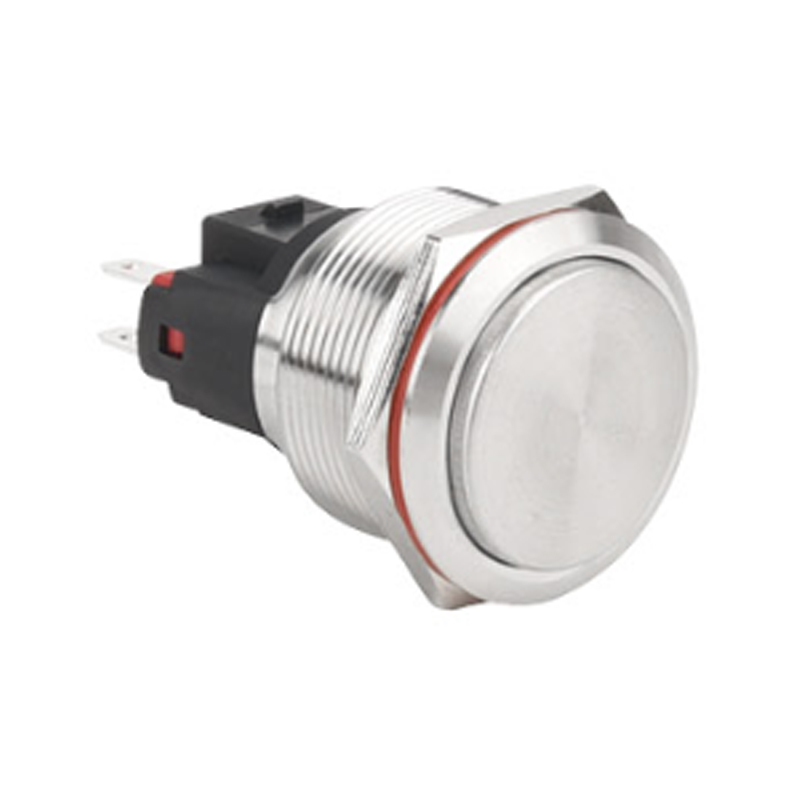
It ensures performance under real operating conditions
When a switch carries high current, heat builds at the contacts. Arcing occurs during opening. The contacts must resist welding and erosion. A high-current button manufacturer tests for these conditions. The switch survives thousands of operations at rated load.
What Goes into a High-Current Button
The contact mechanism
This is the core of the switch. Silver alloy contacts are common. They offer low resistance and resist oxidation. The contact geometry is designed to wipe clean on each operation. A high-current button manufacturer selects the contact material for the specific load type, whether resistive, inductive, or motor.
The terminal assembly
High current requires substantial terminals. Screw terminals with wire guards. Box lug terminals for larger conductors. Quick-connect tabs for automated harness assembly. A high-current button manufacturer provides terminals that accept the required wire gauge without overheating.
The actuator and body
The actuator must operate smoothly even when the user wears gloves. The body must withstand impact, vibration, and temperature bad. Materials include engineered thermoplastics and metal housings. A high-current button manufacturer designs the mechanical structure for the intended environment.
The labeling
Clear function indication. Engraved legends. Color-coded actuators. ON-OFF markings. A high-current button manufacturer ensures the operator can identify the function instantly.
Here is what a typical high-current button includes:
- Silver alloy contacts rated for load current
- Heavy-duty terminals for the conductor size
- Robust actuator with positive tactile feel
- Housing material suited to the operating environment
- Clear and durable function marking
Where High-Current Buttons Get Used
Industrial control panels
Machines need direct control of motors and heaters. A high-current button on the panel door starts the motor without a separate contactor coil circuit. The panel is simpler. The wiring is reduced.
Power distribution equipment
Disconnect functions and bypass switches carry load current. A high-current button manufacturer supplies switches that handle these distribution tasks reliably.
Test and measurement stations
Test benches require repeated connection and disconnection of power to devices under test. A high-current button provides the rated switching cycles without early failure.
Vehicle and mobile equipment
Onboard systems in trucks, buses, and mobile machinery need switches that handle battery and accessory loads. Vibration and temperature swings are constant. A high-current button manufacturer builds for these mobile applications.
What to Look for in a High-Current Button Manufacturer
The current and voltage ratings
The switch must carry the continuous load current. It must interrupt the full voltage without sustained arcing. A high-current button manufacturer publishes clear ratings for both AC and DC loads, as DC switching is more demanding.
The contact life at rated load
Electrical life and mechanical life are different figures. The manufacturer must specify how many operations the switch delivers while carrying full current. A high-current button manufacturer tests and publishes this data.
The environmental sealing
Dust, moisture, and washdown procedures can destroy an unsealed switch. Ingress protection ratings, such as IP65 or IP67, indicate the level of sealing. A high-current button manufacturer offers sealed options for demanding locations.
The mounting and termination flexibility
Panel cutout dimensions must match. Terminals must accept the specified wiring method. A high-current button manufacturer provides clear dimensional drawings and terminal specifications.
Here is what makes a capable manufacturer:
- Published AC and DC load ratings
- Verified electrical cycle life data
- Environmental protection options available
- Standard panel cutouts and flexible terminations
- Consistent production quality
Why Manufacturer Selection Matters
A poor-quality button creates operational problems
Contacts that weld closed. Terminals that loosen over time. Actuators that stick. The machine stops. The operator loses trust. A high-current button manufacturer with proven quality processes prevents these field failures.
A good manufacturer simplifies the design
The engineer specifies one switch instead of a button plus a relay plus wiring. The bill of materials shrinks. The assembly time drops. A high-current button manufacturer whose product ratings are dependable gives the designer confidence to simplify.
A good manufacturer supports the application
The sales engineer reviews the load profile. The manufacturer confirms the switch is correctly applied. Technical documentation is complete. A high-current button manufacturer that provides application support helps the project succeed.
A high-current button is a small part in a large electrical system. But it performs a critical interface function. It gives the operator direct control. It carries the load without intermediate devices. It withstands the electrical and mechanical stress. Choose a manufacturer built on verified ratings, robust contact design, and consistent quality. Your panels will be simpler. Your operations will be reliable. That is the contribution of a high-current button manufacturer. To provide switching components that handle the load directly and last for the application.



Ready to experience the reliability and innovation of WANDU Electric switches?
© Zhejiang Wandu Electric Co., Ltd.
China Push-Button Switch
