
 русский
 Español
Industry News
How Can China Power Switch Enhance Industrial Control Systems?
Date:Jan 06, 2026
Efficient control systems rely on components that combine durability, precision, and flexibility. Among these components, the China Power Switch, Test Button Switch Factory, and Custom Waterproof Button Switch play critical roles in industrial, commercial, and consumer applications. These switches provide electrical control, status signaling, and functional flexibility, making them indispensable in machinery, automation panels, and outdoor equipment. Understanding their technical characteristics, installation methods, and operational considerations helps engineers, technicians, and purchasing teams make informed decisions that improve system efficiency and safety.
The China Power Switch category includes devices designed for handling different voltage and current ranges, while test button switches focus on momentary or temporary actuation to validate circuits or trigger specific functions. Custom waterproof button switches provide reliable operation under moisture or dust exposure, often critical for outdoor or harsh industrial environments. Exploring these components in depth helps clarify their selection, application, and maintenance requirements.
China Power Switch: Technical Function and Applications
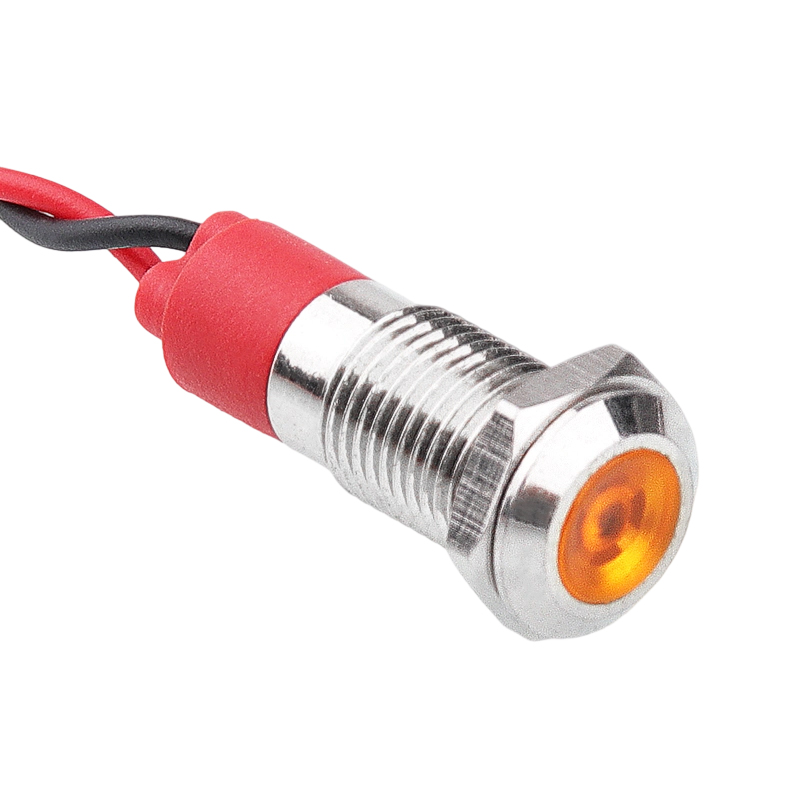
A China Power Switch serves as a primary control element for supplying or interrupting electrical current to machinery, devices, or panel systems. It is widely applied in industrial machinery, commercial equipment, and electrical cabinets where controlled operation is critical. These switches can accommodate different voltage and current ratings, making it important to select a model that aligns with operational needs.
Industrial applications often demand switches that withstand repeated cycles, mechanical stress, and exposure to varying temperatures. Material selection, including metallic contacts with anti-corrosion coatings and sturdy housing, directly influences durability. Some China Power Switch designs incorporate additional features such as fuse integration, LED indicators, or locking mechanisms to enhance operational safety and monitoring. Correct specification ensures the switch supports continuous operation without electrical failures or excessive wear.
In practice, power switches are used in panel boards, motor controllers, and automation systems. Understanding the differences in switching mechanisms—such as toggle, rocker, or push-button types—helps determine which model is suitable for the intended control function. Panel engineers consider actuation force, electrical rating, and environmental compatibility when integrating these switches to ensure proper performance and operator safety.
Test Button Switch Factory: Manufacturing and Quality Considerations
A Test Button Switch Factory specializes in producing components designed for momentary activation, often used to check circuit continuity, initiate system tests, or trigger temporary functions. These switches are essential in testing and maintenance operations, allowing technicians to validate electrical circuits without long-term actuation.
When evaluating factories or suppliers, several factors influence quality and performance. Consistency in manufacturing ensures uniform electrical ratings, mechanical operation, and durability across multiple units. Factories that provide detailed specifications, including rated voltage, actuation force, and mechanical life, enable buyers to plan installations with predictable results. Manufacturing precision also affects tactile feedback, contact reliability, and response time—elements critical for safety and operational verification.
Test button switches are found in control panels, laboratory instruments, production lines, and electronic devices. Their short-term actuation makes them ideal for resetting alarms, conducting diagnostics, or triggering temporary commands. Partnering with a factory that can offer customization—such as varying button sizes, colors, or mounting options—ensures switches match specific application requirements. Additionally, high-quality manufacturing supports longevity and reduces the risk of operational failures during repeated testing cycles.
Custom Waterproof Button Switch: Applications in Harsh Environments
A Custom Waterproof Button Switch provides functional control in environments prone to moisture, dust, or chemical exposure. These switches are widely used in outdoor equipment, industrial machinery, marine systems, and other applications where standard switches may fail due to environmental conditions. By sealing internal contacts and designing housings to meet specific IP ratings, manufacturers enable reliable performance under challenging conditions.
Customization allows adaptation to electrical, mechanical, and aesthetic requirements. Factors such as voltage, current rating, actuation force, button size, and mounting orientation are specified based on the application. Some waterproof switches include illumination for status feedback, tactile mechanisms for operator assurance, or specific materials resistant to corrosion or high temperatures. Proper design and selection ensure that the switch maintains functionality even when exposed to water splashes, dust accumulation, or fluctuating temperatures.
The use of custom waterproof switches extends across industrial control panels exposed to outdoor conditions, automated outdoor equipment, agricultural machinery, and marine control systems. Implementing these switches reduces downtime, enhances operator safety, and prevents failures caused by environmental exposure. Design and installation considerations include proper sealing, panel alignment, and electrical connection integrity, ensuring that the switch continues to operate reliably throughout its service life.
Integrating Switches Into Electrical Systems
Integrating China power switches, test button switches, and custom waterproof switches into electrical or automation systems requires attention to wiring, load ratings, and safety standards. Proper installation reduces the risk of short circuits, accidental activation, or electrical failures. For illuminated or status-indicating switches, ensuring correct voltage supply and incorporating current-limiting components maintains both performance and longevity. Protective devices such as fuses or circuit breakers safeguard equipment and personnel, while panel layout and labeling enhance usability by allowing operators to distinguish functions quickly and accurately.
In industrial automation, combining these switch types provides functional and operational advantages. Power switches handle primary on/off control, test button switches allow temporary activation or diagnostics, and waterproof switches guarantee performance in challenging environments. Strategic deployment ensures systems operate efficiently, operators can interact safely with equipment, and maintenance or troubleshooting can be performed effectively.
Maintenance, Testing, and Operational Reliability
Routine inspection and maintenance are vital to preserving switch functionality. For power switches, testing electrical continuity, monitoring contact wear, and verifying insulation resistance support safe operation. Test button switches may require periodic evaluation to confirm mechanical action and contact performance, particularly in high-cycle environments. Waterproof switches should be checked for integrity of seals and absence of moisture ingress, as even minor leaks can compromise electrical safety. Maintaining a stock of spare components, especially for wholesale or repeated installations, ensures rapid replacement and reduces downtime in critical systems. Regular maintenance also helps prevent unexpected failures, enhancing overall operational stability.
Selecting the Right Switch for Specific Needs
Choosing the appropriate switch depends on operational requirements, environmental factors, electrical rating, and user interface considerations. Consultation with manufacturers or suppliers helps clarify compatibility, mounting options, and customization possibilities. In many installations, multiple switch types are combined to achieve functional efficiency. Illuminated or status-indicating power switches may be deployed for critical operations, test button switches for temporary activation or diagnostics, and waterproof switches for harsh or outdoor conditions. This combination improves safety, reduces operator error, and ensures reliable system performance across diverse applications.
Industry Trends and Innovations
Switch technology continues to evolve with advancements in materials, illumination, and design. Low-power LEDs, tactile feedback mechanisms, modular designs, and corrosion-resistant housings are increasingly common. Manufacturers focus on improving durability while accommodating customization requests, balancing cost-effectiveness with functional integrity. Innovations in sealing, heat management, and mechanical longevity extend switch service life, particularly for waterproof and industrial-grade designs. Custom options allow precise adaptation to project requirements, supporting efficiency, operator safety, and system reliability.
Practical Applications Across Industries
China power switches, test button switches, and custom waterproof switches are utilized across multiple sectors. Industrial automation employs them in motor control panels, emergency stop functions, and diagnostic testing. Commercial facilities incorporate switches in elevator controls, lighting panels, and access management systems. Laboratory and testing equipment use momentary switches for reset and diagnostic functions, while waterproof switches are essential for outdoor or marine installations. Understanding the distinct characteristics and operational requirements of each switch type ensures effective deployment, operational safety, and simplified maintenance across diverse environments.



Ready to experience the reliability and innovation of WANDU Electric switches?
© Zhejiang Wandu Electric Co., Ltd.
China Push-Button Switch
