
 русский
 Español

Industry News
How Can Sale Push-Button Switch Improve Industrial Safety?
Date:Jan 06, 2026
Electrical systems and automated equipment depend on components that provide precise control, clear feedback, and long-term durability. Among these components, the Sale Push-Button Switch, Illuminated Button Switch Manufacturer, and Wholesale Momentary Switch occupy a critical role in industrial, commercial, and consumer applications. These switches facilitate operational control, status signaling, and temporary actuation in complex systems. A solid understanding of their functionality, installation, and maintenance can help engineers, technicians, and procurement teams make informed choices that enhance workflow efficiency and operational safety.
Sale Push-Button Switch: Applications and Technical Considerations
Push-button switches operate by completing or interrupting an electrical circuit through mechanical action. The Sale Push-Button Switch is commonly found in machinery control panels, elevators, consumer electronics, and industrial devices where rapid operator input is necessary. These switches exist in momentary and latching configurations, each serving distinct operational purposes. Momentary switches maintain a closed circuit only while the button is pressed, making them suitable for temporary activations such as motor starters, alarms, or system resets. Latching switches, on the other hand, remain in their switched state until pressed again, allowing for toggle operations and start-stop sequences in machinery and lighting control.
Selecting the correct push-button switch requires attention to voltage and current ratings, which must match the operational environment to prevent contact degradation or electrical faults. Housing materials range from plastics to metals, often designed to resist dust, moisture, and mechanical stress. Sealed designs with appropriate IP ratings are particularly valuable in industrial environments to prevent malfunction and prolong lifespan. Durability is also influenced by the mechanical cycle rating, contact resistance, and material composition, all of which affect maintenance frequency and long-term reliability. Careful specification review and supplier consultation ensure the selected switch meets both performance and safety requirements.
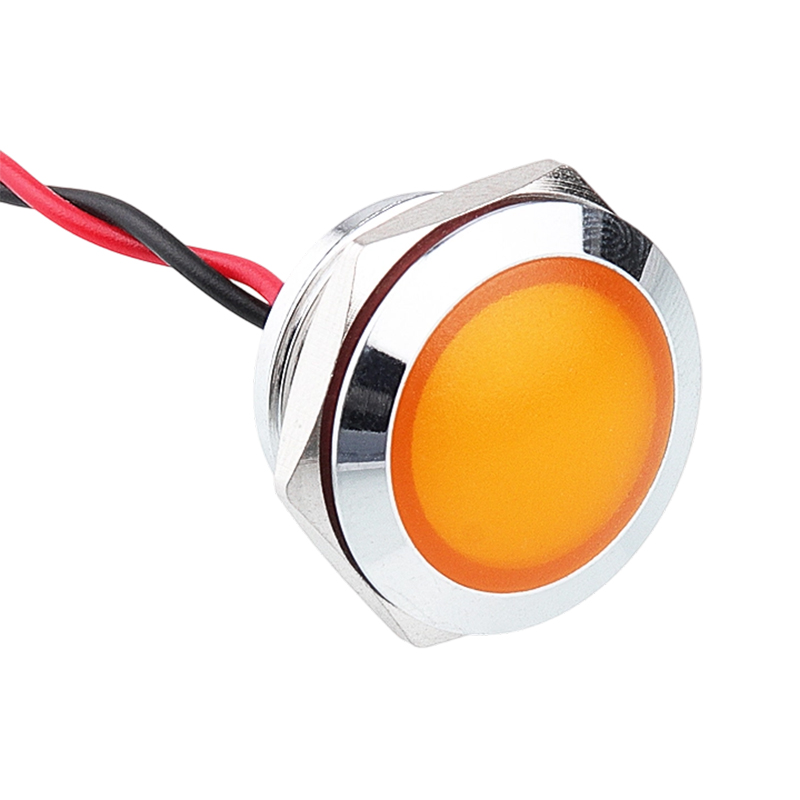
Illuminated Button Switch Manufacturer: Functionality and Customization
An Illuminated Button Switch Manufacturer supplies switches with integrated light indicators, typically LEDs, which communicate operational status to the user. Illumination is especially useful for signaling power status, system readiness, or fault conditions, helping operators respond quickly and reduce operational errors. When considering illuminated switches, it is important to evaluate voltage compatibility between the LED and the main circuit to avoid overcurrent situations. The color and intensity of illumination must support visibility in various ambient lighting conditions, and the switch's mounting and size must align with panel design requirements.
Manufacturers often provide customization options for specific operational needs, including color-coded lights, engraved symbols, and different mounting styles. In large control panels, uniform illumination across multiple buttons enhances clarity, while tailored designs may include heat dissipation mechanisms to maintain LED performance under high-frequency operation. Applications of illuminated switches range from industrial automation and transportation controls to laboratory equipment and building management systems, where visual feedback facilitates efficient, intuitive operation and improves safety by providing immediate status indicators.
Wholesale Momentary Switch: Practical Benefits
Wholesale Momentary Switches are designed for temporary circuit closure, returning to their original state once released. This characteristic is essential for applications such as reset functions, doorbells, industrial command inputs, and interface triggers that require brief activation. Bulk procurement of momentary switches offers advantages in cost efficiency, batch consistency, and customization. Purchasing in large quantities reduces per-unit cost while ensuring that switches across multiple installations perform consistently. Manufacturers often provide detailed specifications, including mechanical life cycle, voltage and current ratings, and environmental tolerances, which support planning for large-scale deployment. Wholesale sourcing also allows organizations to maintain standardized components for maintenance and rapid replacement. Custom specifications such as button size, color, and actuation force can be arranged to align with specific installation needs, creating uniformity and functional consistency across production lines or commercial setups.
Integrating Switches Into Control Systems
Integrating push-button, illuminated, and momentary switches into control systems requires careful consideration of wiring, load ratings, and safety standards. Proper installation reduces the likelihood of short circuits, accidental activations, or electrical failures. Illuminated switches may require separate LED circuits with current-limiting components to ensure stable operation without affecting the main circuit. Protective measures such as fuses, relays, and circuit breakers are critical to safeguarding equipment and maintaining operational safety. Panel layout also plays a significant role in usability, as logically arranged and clearly labeled switches enable operators to distinguish between different functions quickly. In industrial automation, combining illuminated push-buttons for critical operations with momentary switches for temporary commands and non-illuminated switches for less frequent tasks enhances both usability and operational efficiency, ensuring accurate and timely control.
Installation, Testing, and Maintenance Considerations
Proper installation and maintenance are essential for long-term switch performance. Verifying panel cutouts, securing fasteners, and ensuring proper alignment are key during installation. Electrical testing confirms circuit continuity, voltage compatibility, and current-handling capability before activating the system. Routine inspections for dirt, debris, and contact wear help maintain operational reliability, while illuminated switches may require occasional checks of the LED driver or internal connections, particularly in high-cycle applications. Maintaining an inventory of spare units is important, especially for wholesale momentary switches deployed across multiple systems, as it allows for rapid replacement and reduces operational downtime. Regular maintenance preserves functional integrity, prevents unexpected failures, and contributes to overall system efficiency and safety.
Selecting the Right Switch for Your Application
Choosing the appropriate switch depends on factors such as mechanical action, voltage and current rating, environmental conditions, ergonomic design, and user interface requirements. Consultation with manufacturers or suppliers helps clarify compatibility, mounting constraints, and customization options. In practice, control panels often combine multiple switch types to optimize function and usability. Illuminated push-buttons may handle critical operations, momentary switches may execute temporary commands, and latching switches may control infrequent actions. This strategic combination improves operator experience, enhances efficiency, and reduces the risk of errors, while ensuring the installed system meets both functional and safety objectives.
Industry Trends and Emerging Designs
The switch industry continues to evolve, incorporating advanced materials, ergonomic designs, energy-efficient illumination, and improved mechanical longevity. Low-power LEDs, tactile feedback mechanisms, modular assembly, and robust housing contribute to extended service life and easier integration. Manufacturers focus on balancing production cost with functional integrity, providing solutions suitable for both small-scale and wholesale procurement. Innovations in sealing, heat dissipation, and mechanical life cycles have extended the usability of switches in demanding environments. Customization options, such as specific button colors, actuation forces, and LED designs, allow precise adaptation to project requirements, further enhancing usability, operator safety, and system performance.
Practical Applications Across Industries
Push-button and momentary switches have widespread applications across various industries. In manufacturing and automation, they serve as motor starters, emergency stop functions, and control panel inputs. In commercial buildings, switches are used in elevator controls, lighting panels, and access systems. Laboratory equipment utilizes switches for instrument activation, reset operations, and safety alarms. Transportation systems incorporate switches in vehicle control interfaces, railway signaling, and public transit equipment.
This coverage provides an in-depth examination of Sale Push-Button Switch, Illuminated Button Switch Manufacturer, and Wholesale Momentary Switch, emphasizing technical features, installation strategies, operational integration, and maintenance practices. By focusing on practical applications and procurement guidance, this discussion supports engineers, technicians, and purchasing teams in making informed decisions for industrial, commercial, and consumer use.



Ready to experience the reliability and innovation of WANDU Electric switches?
© Zhejiang Wandu Electric Co., Ltd.
China Push-Button Switch
